

he Spirit of Assisi arose from the initiative of John Paul II to hold an Interreligious Meeting in 1986 in the city of Assisi, as a city symbol of peace. One hundred and fifty representatives of the twelve main religions of the world participated in the meeting, whose purpose was dialogue and friendship between the different religions. The meeting established a clear opposition to violence in all its forms, mainly fratricidal wars and the practice of religion that favors violence and war. After this initial date, Pope John Paul II in 2002 once again summoned representatives and religious leaders to Assisi.
Since that first meeting, the city of Assisi has been considered a city of peace. It should be noted that during the spring and summer, thousands of foreigners visit this city as tourists. This city and its people welcome visitors, in addition to giving them hospitality in the different hostels and hotels. The city of Assisi as a city of peace reflects the desire of humanity to live with justice and peace in this common home.
The cry of those forced to migrate
A migrant is treated according to their economic category, or by their migratory status. That is, at the administrative level, there are regular and irregular migrants. The world reality is showing us that migration is a human drama. According to the UNHCR, “the number of people displaced by wars, violence, persecution and human rights violations amounted to 89.3 million, that is, 8% more than the previous year and more than double in relation to the figure of ten years ago”(1).
The situation of human mobility is a situation that dehumanizes. According to global data provided by UNHCR there are 21.1 million refugees, 52.2 million displaced persons and 4.6 million asylum seekers. When looking at the way in which states are responding to the drama of human mobility, Colombia is the Latin American country that has offered the most hospitable welcome to migrants (2).
We must keep in mind the causes of forced migration throughout the Latin American continent. Migration has its origin in the systems and structures that governments are developing, leading the majority to impoverishment and poor quality of domestic life. Other causes include natural disasters due to climate change and the lack of risk management in the territories. The COVID-19 pandemic also deteriorated household economic conditions. Other causes include institutional violence, organized crime, street crime, and violence against women (femicide). A situation that has been increasing is homophobic violence towards people from the LGTBIQ+ community, rooted in the macho mentality, and forcing them to migrate.
The human drama of recent months is the thousands of migrant Venezuelans who have overflowed the Colombian border and the Darién jungle. This is a muddy journey, wrought with wild animals, wounds, and blood. The stories speak of deaths on the road and common graves, added to the particular violence experienced by women at the hands of men who commit crime and robbery in the jungle. These days of October 2022, Venezuelan migrants are “returning” from different countries, due to the new policies in Washington that closed the land entry to Venezuelans who arrive at the southern border of the United States. Apparently the Venezuelan embassy in Panama has begun to return its compatriots. This has an economic cost. But hope will always be the last word for every migrant who walks with dreams and courage.
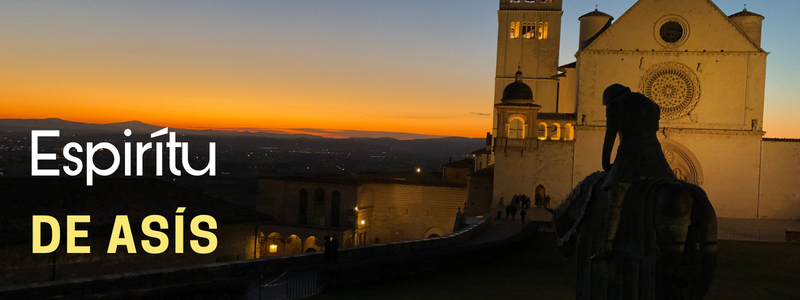
The Spirit of Assisi
Returning to the “Spirit of Assisi,” we can highlight various aspects of the spirituality and charism proposed by the poor little Assisan that enlighten us today in accompanying the migratory drama that we are experiencing at this time. St. Francis went to meet the other, beyond the walls of Assisi. That “other” who was marginalized and impoverished, who walked those roads. There he embraced the leper as if he were his brother.
Every human is my neighbor and brother or sister, an aim to recognize the human dignity as a child of God that each person carries. Being brothers and sisters makes us recognize in the other a being with the same rights that protect the quality and dignity of life. Being a brother or sister is contrary to considering the other as an enemy, and there is no place for xenophobia and racism. Today, being each other’s brother and sister becomes a possibility to save lives.
If we place ourselves as brothers and sisters with others, we will develop strategies of hospitality, welcome and dialogue, which allow us to treat every human being we meet on the road with dignity. Being a brother and a sister is a way of existing and being in the world that moves to build relationships of equals, appreciation, and contemplation of the human-divine mystery behind each face. We are relational beings where the encounter becomes a possibility of healing and salvation. Hospitality has to lead us to recreate new forms of care and defense of the other who walks through these territories.
Being fraternal and feeling as part of all creation, as Francis lived in a single cosmic praise, leads to a commitment to the care, protection and development of life in this common home. Forced migration is the cry of the same “sister mother earth” that tears and bleeds in each country. The generative words that emanate from the Spirit of Assisi and that make us brothers and sisters with the migrant are: be peaceful, dialogue, hospitable, friendly, cordial, protectors, defenders, caretakers, open and contemplative with each human that goes by the roads.
Let us hold to the image of Francisco’s meeting with the Sultan, where the embrace is recreated in a social and political, spiritual and cosmic friendship that has a single blue roof in this common house.
The members of the RFM, moved by the “Spirit of Assisi,” aim to be good news that with a peaceful and fraternal attitude seek to accompany forced migration, seeing in each migrant a son and daughter of God, therefore, a sister or brohter to be embraced and cared for.