
Pilgrim: (n.) A person on a journey, a person who travels from place to place; a traveler, a wanderer, an itinerant. Also in early use: a foreigner, an alien, a stranger. (source: Oxford English Dictionary)
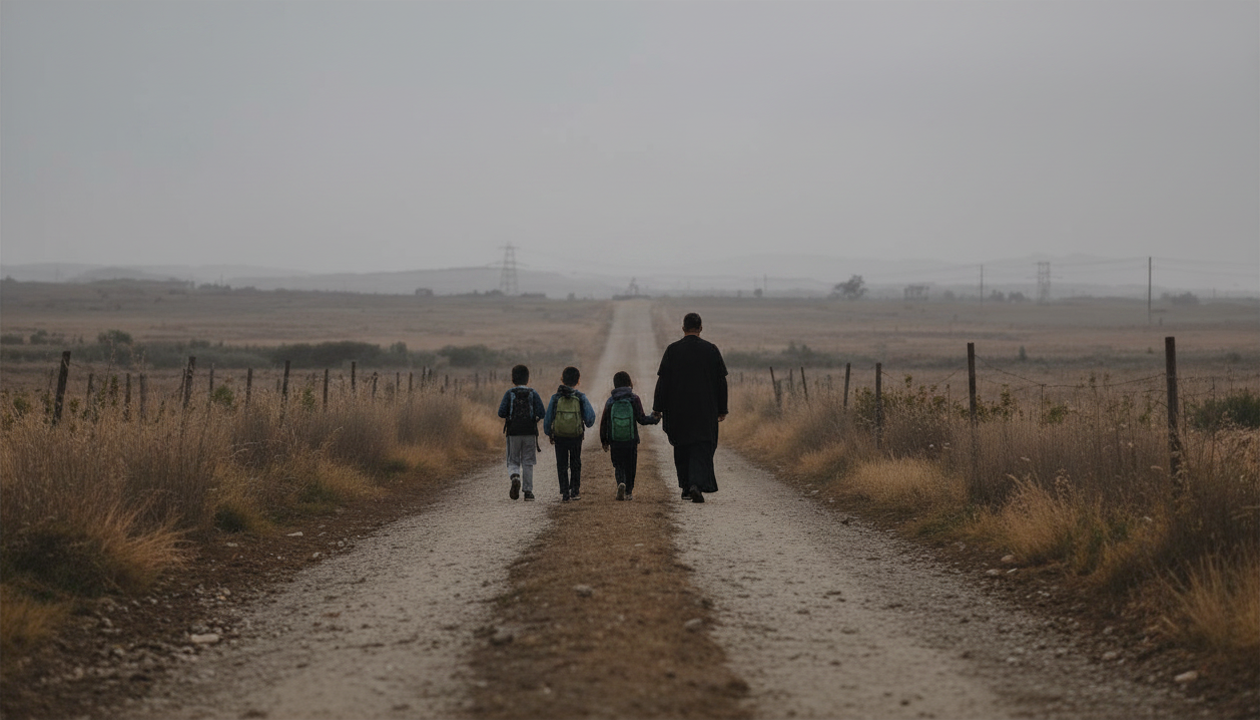
I will never forget the day that Julio* shared with me the joy he felt being called a “pilgrim.” “The Pope says we are ‘pilgrims!’” he declared in a loud voice, smiling and walking a little taller after Mass that Sunday. We had just listened to a homily underscoring a hopeful message in our Church: that migrants are pilgrims and missionaries of hope in our world. This is a stark contrast to the dehumanizing narrative that has increased exponentially in the United States since January 2025, leading to anti-immigrant policy enforcement that has created fear, violence and a very strategic disruption of millions of peoples’ lives as they search for safety, security and family reunification in our continent. The declaration that people in migration are pilgrims not only declares their dignity but highlights their sanctity in the eyes of our faith.
In St. Paul’s Letter to the Hebrews (Heb. 11), Christians are reminded to be “pilgrims and strangers” in this world. St. Francis referred to this in his Testament and called his followers to do the same. What an identity for Franciscans to embrace! In 2026, 304 million people are in migration globally, and there are approximately 57.5 million international migrants in the Americas – 50 million in North America and 7.5 million in Central and South America (source: International Organization for Migration). Consider the prophetic invitation for Franciscans residing in the U.S., where more than 70,000 “pilgrims” have been detained, and the Department of Homeland Security reports deporting over 675,000 and an additional 2.2 million have left of their own volition.
Now is the time to ask ourselves: How do we Franciscans identify and stand in solidarity with our fellow pilgrims?
Pilgrims like Sergio*, who first came to the U.S. 37 years ago. He lived in Tacoma, Washington, and worked in an industrial pipe factory and flower fields. He later worked as a food distributor when his company promoted him to manager due to his excellent work ethic. He eventually started his own landscaping company. It was rapidly expanding when he was detained by Immigration and Customs Enforcement on his way to work one day. He has three dependent U.S. citizen children. His company employed 18 people who depend on the company’s health to support their own families.**
Or pilgrims like Eduardo*, who had retired from the Mexican army when former soldiers approached him to join the local mafia. They beat Eduardo and threatened to kill his family members if he refused to join. Seeing no way to remain safely, Eduardo and his family decided to seek asylum in the U.S. During the asylum process, a judge ordered his deportation, but Eduardo appealed the decision. An ICE official ordered Eduardo’s removal in spite of the ongoing appeals process, then forged Eduardo’s signature on a document seeking removal. Eduardo and his family are now back in Mexico, in fear for their lives should the mafia discover that he has returned.
One way Franciscans live in solidarity with Sergio, Eduardo and people in similar situations is through the Franciscan Network for Migrants (Red Franciscana para Migrantes), a network of people and service centers in the Americas who, inspired by Franciscan spirituality, reach out to migrants in their respective countries of origin, transit and destination. Their mission is to foster a culture of encounter with migrants in the Americas by promoting, protecting and defending their human rights regardless of their immigration status, following a vision of a continent capable of welcoming and integrating migrants.
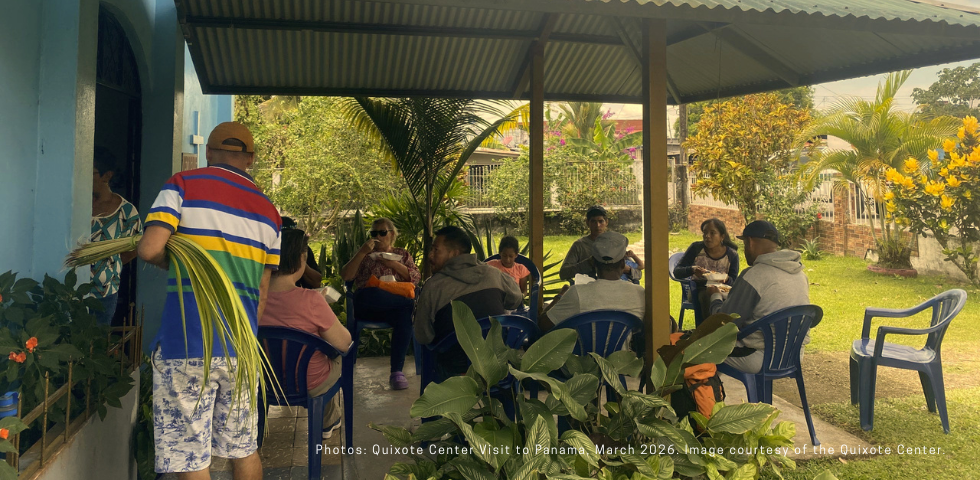
What does solidarity look like in this network? It looks like the East Wisconsin Franciscan Justice Circle doing a Jericho Walk around the ICE enforcement agency in Milwaukee. It looks like solidarity travel to Franciscan migrant shelters in southern Mexico and Panama guided by the Quixote Center, offering transformative immersion experiences for accompaniment and advocacy. It looks like Sandra at Casa Franciscana in Guaymas, Mexico, who accompanies Genevieve*, a young Cameroonian woman who fled violent civil conflict in her home, seeking asylum in the U.S. After travelling from Africa to Brazil, through Panama, Honduras, El Salvador, Guatemala and most of Mexico, her journey ended abruptly in Guaymas in a train accident, amputating her left foot. Today, accompanied by Sandra and others at Casa Franciscana, Genevieve is safe, has a place to live, speaks Spanish and is studying to become a beautician.
Do you identify as Franciscan? Do you live as a pilgrim and stranger? If so, how? If not, why?
*Name changed to protect identity.
**This person was interviewed by Kino Border Initiative team members in Nogales, Sonora, MX, where I minister full time.
Escrito por: Eileen McKenzie, FSPA
Photos: Quixote Center Visit to Panama, March 2026. Image courtesy of the Quixote Center.