
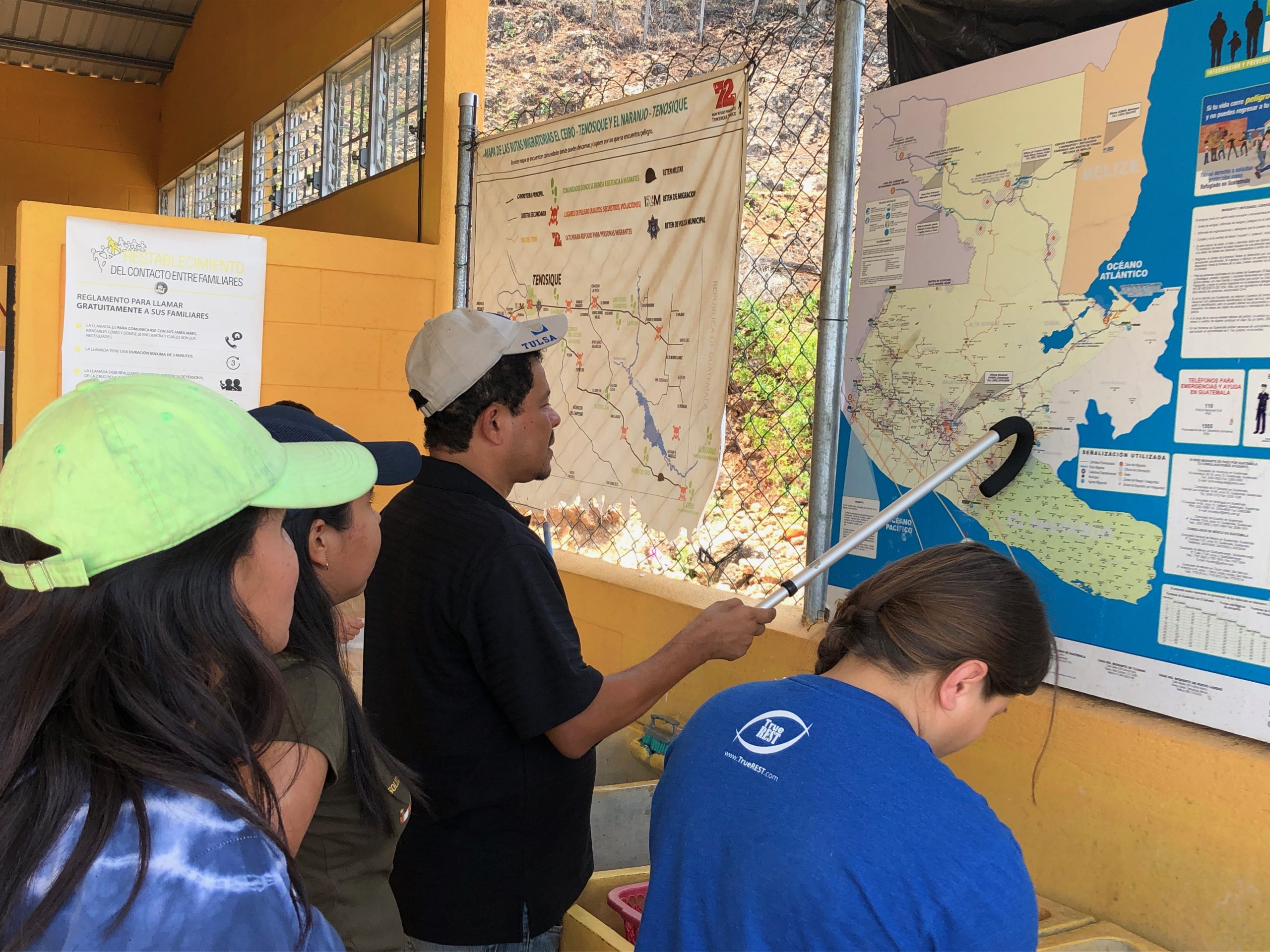
Members of the Network are already providing a myriad of resources to migrants. Network members will be able to enhance each other’s work by sharing information and resources via different media (bulletins, meetings and gatherings, capacity-building seminars, resource and route maps, threat advisories, etc.) that they can then pass on to migrants in their care along the route.

8th International Day of Prayer and Awareness against Human Trafficking
The theme of the eighth International Day of Prayer and Awareness Against Human Trafficking is “The Power of Care – Women, Economics, Human Trafficking”.

Journalism is still a deadly business
The Mexican State has a duty to guarantee effective protection for journalists.

A friar from Brazil as a volunteer at La 72
We had the pleasure of interviewing him to find out more about him and what motivated him to volunteer at the shelter

Honduran hope has a woman’s name
Instead, this is a time for civil unity, for taking up the struggles of the native peoples and peasant communities. A time for strengthening the institutions that defend human rights, for re-establishing the autonomy and credibility of the powers of the State

Christian Unity, Human Solidarity
The ecclesial division, inequality, and social inequity generated by the hegemonic neoliberal system continue to create marginalized and discarded victims; among these victims and discarded are forced to migrate

A Migrant’s Hope
As the minutes, hours, and days go by in the migrants, love-made hope is emerging from within them. Those feelings that disrupt the human being and that, at the same time, are part of the human being as a whole and go together with the other noble feelings of struggle, resistance, solidarity, compassion, and hope.

“The Word became flesh…” and God became a migrant …
This Christmas, we unite ourselves to the wishes of each migrant who carries in a backpack a burden of hope and a hunger for justice

Solidarity is the strength of the excluded
On 20 December, the United Nations commemorates the International Day of Human Solidarity, which seeks to reaffirm the commitment of nations to build a world of greater solidarity and peace, respecting diversity and promoting initiatives aimed at reducing poverty. However, how can we talk about solidarity when every day we see the success of individualism and injustice towards migrants in the media and in the homes, shelters, refuges and canteens for migrants?

“My father was a wandering Aramaic, who went down to Egypt and went to take refuge there with a few people” Dt 26.6
Christian believers have a biblical heritage, marked by migration or displacement of families and peoples. From chapter 12 of the book of Genesis a whole story of migration begins

New section on the Franciscan Migrant for Network website
“Para Migrantes” brings resources and advice to people on the journey, in the hopes that we can help reduce some of the risks involved in migration and mitigate some of the potential for harm on the way.